Choosing El Buen Pastor

Sometimes, the Spirit leads us where we least expect.

In March 1994, the people of El Salvador held their first democratic elections in more than 60 years. That same month, New Hope Lutheran Church took its first concrete step toward building a sister church relationship through the Sister Parish Program.

Originally, a congregation in San Miguel was suggested. But after deeper conversation with Sister Parish coordinators, another church rose to the surface: Iglesia Luterana El Buen Pastor in Usulután. Located in a region devastated by war and without an existing sister relationship, this small but mighty congregation was struggling, rebuilding, and dreaming big.

New Hope said yes.

By May 1994, the first formal communications were underway. New Hope sent photos and stories about its own church family. El Buen Pastor responded with a bold proposal: to jointly launch an agricultural loan fund to help local farmers restart their livelihoods. This wasn’t just a request for aid—it was a vision for shared mission and long-term development.

And just like that, the partnership took root—not in mere donation, but in shared planning, mutual goals, and deepening faith.

The Spirit was moving, and both churches were listening.

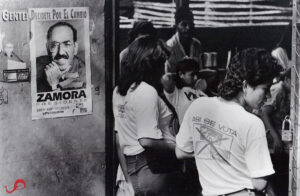
An interesting aside: the New Hope delegation would later meet Ruben Zamora, who is pictured in the campaign poster in the picture attached to this blog entry, when they first visited El Buen Pastor in 1995.. The delegation very much enjoyed meeting him and found him to be a charismatic leader and passionate advocate for the poor in El Salvador.
From Global Celebration to Global Partnership (1993–1994)

In the early 1990s, New Hope Lutheran Church was finding new ways to live into its calling to love and serve beyond its walls. One key initiative? The Global Celebration: a special event that combined education, worship, and direct action, collecting school supplies for children in El Salvador.
But it was more than a supply drive. In January 1994, something unexpected happened.

Rev. Dan Long, the missionary supported by New Hope, visited the congregation to share stories of his work. During that Global Celebration, he gave more than a presentation—he extended an invitation. Long suggested that Peggy Contos and Pastor Quill reach out to the Sister Parish Program based in San Salvador. That suggestion turned into a turning point.

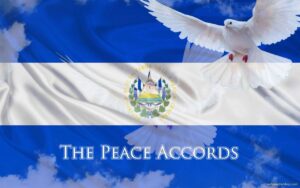
Meanwhile, on the other side of the world, El Salvador was changing. The Peace Accords were signed in 1992, formally ending the civil war. For the first time in generations, there was a chance to build—not just rebuild—a new society. Faith communities like El Buen Pastor Lutheran Church in Usulután were deeply involved in this process, helping communities heal and flourish.

New Hope began imagining something more than financial support: a true relationship. A sister church. A community-to-community partnership grounded not in charity but in mutual sharing.

And so the conversation began.

El Buen Pastor: The Spark of a Sisterhood (1991-1992)

In 1991, a spark of generosity lit a fire that would grow into a lasting relationship across borders, languages, and decades. What began at New Hope Lutheran Church in Missouri City, Texas, as a financial commitment to support a missionary became the first page in a story of transformation that continues today.

At the heart of this beginning was Pastor Stephen Quill and New Hope’s mission-minded congregation. They heard the call to support Rev. Dan Long, a Lutheran missionary serving in El Salvador during a time of enormous unrest. The country had been engulfed in civil war for more than a decade, and the Salvadoran Lutheran Church, under the leadership of Bishop Medardo Gómez, was ministering to displaced families and traumatized communities in the wake of unimaginable violence.

New Hope agreed to pay Rev. Long’s pension contributions while he was on mission—a quiet, faithful decision that opened the door to deeper engagement. This early act reflected New Hope’s character: a congregation rooted in Lutheran theology but open to the needs of a rapidly changing world.

The seeds of partnership were sown in this act of solidarity. The soil? A congregation deeply aware of its blessings—well-resourced, multicultural, socially engaged—and willing to look beyond its own borders to ask what God might be doing elsewhere in the world.

The relationship that began with this financial support would become something far greater: a living expression of what it means to be the Body of Christ across nations.