Reign of Christ Sunday 2022

Luke 23:33-43

33 When they came to the place that is called The Skull, they crucified Jesus there with the criminals, one on his right and one on his left. 34 Then Jesus said, “Father, forgive them; for they do not know what they are doing.” And they cast lots to divide his clothing. 35 And the people stood by, watching; but the leaders scoffed at Jesus, saying, “He saved others; let him save himself if he is the Messiah of God, God’s chosen one!” 36 The soldiers also mocked Jesus, coming up and offering him sour wine, 37 and saying, “If you are the King of the Judeans, save yourself!” 38 There was also an inscription over Jesus, “This is the King of the Judeans.”

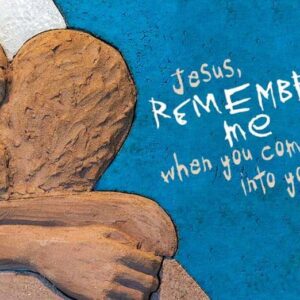
39 One of the criminals who were hanged there kept deriding Jesus and saying, “Are you not the Christ? Save yourself and us!” 40 But the other rebuked him, saying, “Do you not fear God, since you are under the same sentence of condemnation? 41 And we indeed have been condemned justly, for we are getting what we deserve for our deeds, but this man has done nothing wrong.” 42 Then the criminal said, “Jesus, remember me when you come into your kingdom.” 43 Jesus replied, “Very truly I tell you today, you will be with me in Paradise.”


————————


Please pray with me this morning, church:

Holy living, crucified, and risen Christ,

The world is yours and all that is in it.

All things are under your feet,

And around, within, and above it all, you reign.

Remind us of this simple truth, this morning.

That all things are yours.

Amen.


————————


There’s a piece to the great banana saga that Danny talked about in his sermon last week that didn’t get mentioned at the time. It is this: I, for one, am extremely grateful to the Cavendish banana. Maybe you’ve seen me around on Sunday mornings with my banana and coffee…some of our young folks like to give me a hard time about it. I’m grateful to the Cavendish banana Danny talked about because I eat bananas like they’re going out of style. Seriously…2-3 bananas a day. They’re a great post-workout breakfast, they’re handy, and they’re extremely portable.

So a world without bananas, whether Big Mikes or Cavendishes, sounds to me like…I don’t know…the opposite of paradise that Jesus talks about on the cross in our gospel reading this morning. Like, if a kind of hell is the opposite of paradise, then hell, for me, is a world in which i have to find something else to eat for breakfast. I’m just not sure I would have survived the Great Banana Blight of the early 20th century. “Take me with you, Jesus. I’m not made for a world without bananas. Take me with you to paradise where I’m certain there are plenty of tropical fruits.”

If hell is a world without bananas, then paradise, at least for me, I have to believe, is a sandy beach next to turquoise water with a fruity drink and plenty of Big Mikes and Cavendishes to go around.

I wonder what paradise might look like for you, church.


On this Reign of Christ Sunday—or Christ the King Sunday—we close the chapter on yet another liturgical year and get ready to turn to the next page and begin a new liturgical year with the First Sunday in Advent. We’ve made our way all the way around all the colors of our liturgical calendar and we’re ready to begin anew starting next Sunday. And as time marches forward, we both give thanks for the year that was and look with anticipation toward what’s coming.


Reign of Christ Sunday is a Sunday and a Festival to remember what’s truly important, what holds all of *this* together. Amidst the changing seasons and all the different liturgical feasts and celebrations, throughout it all, Christ holds all these together. Jesus is the central figure that draws us together as God’s people. And throughout all the divisive turmoil and frightening change of the world around us, God, in the person of Christ, is the one who is around it, cradling all of it in God’s arms; within it, walking with us through it every step of the way; and the one who stands above it all, guiding and pointing the way beyond all of the noise and shouting and harshness and cruelty that have become so commonplace in our lives.


Reign of Christ Sunday is an opportunity to recognize and remind ourselves, at the end of the church year, that all things are God’s. Everything we’ve just come through…is God’s. Everything to come…is God’s. All things are God’s.


Especially in the world we live in, we’re raised and conditioned to believe that all we have is our own, that we’ve made our own way, that what we have we’ve earned, and it’s our to do with what we want. Reign of Christ Sunday is a corrective lens to that worldview that says, in fact, it is all God’s. It is God’s action, God’s help, God who has done for us what we cannot do ourselves.


The prophet Jeremiah, speaking for God, reminds God’s people of all God has done. “Thus says the Lord, concerning the shepherds who shepherd my people: It is you who have scattered my flock, and have driven them away, and you have not attended to them…so I will attend to you for your evil doings. I will gather the remnant of my flock…I will bring them back to the fold, and they will be fruitful and multiply. I will raise up shepherds over them who will shepherd them, and they shall not fear any longer, or be dismayed, nor shall any be missing. I will raise up for David a righteous Branch, and this king will deal wisely and will execute justice and righteousness in the land. Judah will be saved and Israel will live in safety. And this is the name by which the king will be called: ‘The Lord is our righteousness.’”


It is God’s action. God gathers the people. God raises up the righteous Branch. God—the Lord—is our righteousness. It is God who saves, not us.


A salvation that comes through the crucifixion of Jesus. A justice, a righteousness, and a way of ruling that is completely unexpected. Not at all what we think of when we think of how a king rules. Christ rules from a cross, executed between two criminals The throne of Christ is affixed to that cross, a humiliating way to die, certainly not fit for a king. And yet Jesus is pronounced a king by those very same people who put him to death. The inscription above him reads “This is the King of the Judeans.”


Completely backwards from what we think of kings. Not a throne, but a cross. Not a crown of gold, but a crown of thorns. Not lush robes and fine linens, but a single cloth garment, mostly naked and exposed. Not a scepter, but a sponge of sour wine on a stick. Not royal decrees and pronouncements of judgment, but words of forgiveness and promises of life. “Father, forgive them… You will be with me…”


If our whole worldly system is set up as a race to the top, the dominion of God is a race to the bottom, to be found alongside those of lowest estate, those without, those with no status or wealth, the poor, the marginalized, the vulnerable, the ones the world thinks nothing of. This is your calling to discipleship, church. A path marked by justice, compassion, forgiveness, mercy, and love.


It’s a backwards way of living, but it is the way walked by Jesus, and the way of discipleship to which you are called, Christian.


And around, within, and above it all, Christ reigns.

All things are God’s.


As we’re in the thick of our Season of Stewardship, I find this reminder extremely comforting. As we look at deficits, stare down budget planning, and try and get all these things back into alignment…all the while experiencing the very same things you are at home: costs on everything soaring, being asked to do more with less, trying to stretch every last cent further… The anxiety about it all is debilitating sometimes. I know it is, church. I know it is.


But this morning I’m reminded that all things are God’s and it is God who saves, not us. We cannot save ourselves. That’s God’s work.

It doesn’t excuse us from doing what we can. There is still work for us to do and a role for us in these tough times. But I can take some deeper breaths knowing that God is in the midst of all of this, and is, in fact, working with us to figure it all out.


Last week, Danny preached about what people of God, and specifically, you people, us people, of New Hope, do when roads get tough and we’re not sure if we’ll make it all the way up this current mountain we’re climbing. I’ve been thinking about FM 1092 lately, the road just out our front door. They’ve been doing a lot of work on it this year, and they stripped it all up, and the past couple of weeks it’s been not super-pleasant to drive on. But someday soon, they’ll repave it. Someday soon, it’ll be a brand new smooth road.

When we’re climbing mountains and trying to overcome obstacles, there is no guarantee that we’ll reach our goal. And when we run out of gas, as Danny said, we get out and push. But when our legs won’t even work…when we’ve exhausted all of the energy that even we ourselves have…this is the exact moment for faith. When we get to the very end of what we ourselves are able to do, we finally must rely fully on God to get us the rest of the way. And what you’ll find, church, is that God has been there all along, helping you push, helping you get up the mountain…and that moment of faith is trusting that when we get to the absolute limits of what we are able to do ourselves, that God will get us that last little bit over the top. Trusting God to do what God promises.


Yes, there is work to do, church.

And we cannot do it without you. It will take all of us.

But we do not do this work by ourselves.

Around, within, and above it all, Christ reigns.

All things are God’s.

Thanks be to God.


All Saints Sunday 2022

Luke 6:20-31

20 Then Jesus looked up at his disciples and said: 

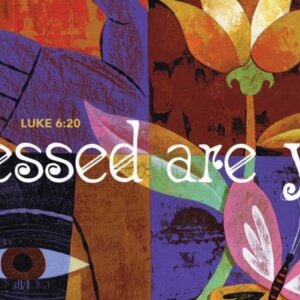
 “Blessed are you who are poor,

  for yours is the kingdom of God.

21 “Blessed are you who are hungry now,

  for you will be filled.

 “Blessed are you who weep now,

  for you will laugh.

22 “Blessed are you when people hate you, and when they exclude you, revile you, and defame you on account of the Son of humanity. 23 Rejoice in that day and leap for joy, for surely your reward is great in heaven; for that is what their ancestors did to the prophets.

24 “But woe to you who are rich,

  for you have received your consolation.

25 “Woe to you who are full now,

  for you will be hungry.

 “Woe to you who are laughing now,

  for you will mourn and weep.

26 “Woe to you when all speak well of you, for that is what their ancestors did to the false prophets.

27 “But I say to you that listen, Love your enemies, do good to those who hate you, 28 bless those who curse you, pray for those who abuse you. 29 If anyone strikes you on the cheek, offer the other also; and from anyone who takes away your coat do not withhold even your shirt. 30 Give to everyone who begs from you; and if anyone takes away your goods, do not ask for them again.

31 Do to others as you would have them do to you.”


————————


Please pray with me this morning, church:

Holy God,

We lovingly remember those who have died

Who have joined the great company of all the heavenly saints.

We recognize our calling through our baptism

To be holy and saints in our own time and our own place.

Renew and restore our hearts in your promises, God.

Sustain and nourish us in the calling and the hope

We have received from you.

Amen.


————————


By now, church, you know that my favorite sacrament is baptism, right? I mean, like, besides all the lovely important imagery and deep meaning of the act of baptism itself, I just have a lot of fun when I get to shower you with water and remind you of your baptism. It’s one of the more playful aspects of worship and I take a great amount of delight in it.

We should delight in worship, I think. We’ve got enough stodginess in our lives, amen?


But I think I’ve also told you before that baptism hasn’t always been my favorite sacrament. Growing up, communion was extremely important to me. I cherished the opportunities to have something placed in my hand and be told that this was a gift of God and it was for me. Powerful, powerful stuff. That, and it was kind of a snack break in the middle of the service, so that felt nice, too.


It was really during seminary that this shift in having a new favorite sacrament happened. As I dove more into baptism and all the things wrapped up in it and this idea of, not just of baptism as a singular event and a kind of one-and-done-type thing, but this idea of a baptismal way of living, I really started to feel like we don’t talk about baptism all that much or all that importantly in the Lutheran church.


And just as a side note, I know Reformation Sunday was last week and we kind of got all our Lutheranism out last week, but if you’re new to this whole Lutheran thing or you just are in need of a refresher, a little bit of Lutheran theology for you this morning…the Lutheran church confesses there are 2 Sacraments: Baptism and Communion. The Catholic Church confesses there are 7, but Luther was like, “Ehhhh…all that other stuff is kinda extraneous and it doesn’t quite fit with what a sacrament is, so really there are only 2.” Side note to the side note, Luther would have also lobbied pretty hard for Confession and Forgiveness to be considered a Sacrament, but he landed on 2. A Sacrament, by the way, Luther said, is an outward and tangible expression of an inward and divine reality. It’s a physical thing, something you can touch, connected with a word of promise from God, and instituted by Christ. Of all the lovely and meaningful aspects of our faith and worship, Luther said, Baptism and Communion fit those criteria.


So, of the two, I have a clear preference for baptism. And I’m not exactly apologetic about it, either.


All Saints Sunday is when we get to lean in hard to these foundational understandings of baptism.

That through our baptism, we are named “Beloved child of God” and our lives are claimed by God for God’s purposes. That through an act as small as a trickle of water running down our foreheads, God somehow reaches down into the world, the divine touches the temporal, heaven meets earth, and the lines between each get blurred, if just for a moment. We are joined to God’s family and we make promises as a family. As parents, as sponsors, and even you, church, even this family, we make promises to God, to the baptized, and to one another. Baptism is this kind of public demonstration of a reality that we believe is already present—that, in fact, we are God’s, we are beloved, we are part of and joined to the body of Christ, and that we are given to and for one another and called to live for the sake of others.

These realities are already true; baptism is a tangible expression of that.


And as members of God’s family, as God’s people given and living to and for one another, you are declared holy. You are made saints. You are declared and made that which you already are, a reality that is already present…you are holy and you are saints. You are enlightened with the Holy Spirit moving and active in your life and in the world, propelling you to be the disciples of Christ that you have been called by God in your baptism to be.

When we talk about All Saints Day, we remember, yes, all those who have gone before us, all the faithful departed, all those giants and titans whose shoulders upon which we stand…but we are are also talking about you, dear child…you, dear people…you, dear church…you are saints and you are holy. And you are called, just like all those who came before you, to do your best to live a life worthy of the calling you have received from God.


I mentioned in our announcements that we had a baptism last Sunday, in the afternoon. We have some folks who are part of our community, who are part of the life of this community—we have a number of folks who are part of our community who are being cautious about the pandemic, and they worship with us and participate as much as they can virtually, and they’re part of this community. And so we had some folks who wanted to have their newest baby girl baptized.

And so we did. And you know what, church? You were there. You were present. This community of faith, this family of saints, was present. Just like I can’t really explain how the divine and the earthly meet and intermingle in the sacraments, in a way I can’t really explain, you were present at Alexis’ baptism.

Thank you for showing up. Thank you for promising to support Shannon and John and big sister, Brooklyn. Thank you for letting them know that you take very seriously the responsibility to be a loving, affirming, nurturing place for them. Thank you.


And just as somehow you were present at Alexis’ baptism last week, just as somehow God reaches through time in baptism, God and Christ are somehow present in the meal we share together. The sacraments have a weird way of blurring these lines between the heavenly and the earthly. There’s some sort of intermixing of the two when we participate in the Sacraments. And although I give the slight edge to baptism, I still do love communion.


I heard a sermon a number of years ago talking about Communion and All Saints and have always wanted to mention it, but hadn’t really found the opportunity until now. It broke open this whole idea of communion and saints for me. If we say and confess that somehow Christ is present in the meal we share together, if it’s true that the sacraments have a way of facilitating the meeting of the divine and the earthly, then what or who else might be present at this table? We talk about the Communion of Saints and we generally mean the great multitude of all those who have gone before, but what about Communion with the saints? If Christ is somehow present in this meal, if God shows up in this sacrament week after week, isn’t it possible that there is room around this table for your loved one, too?


It’s an understanding that kind of borrows from Mexican culture and a Mexican Feast Day we know as Día de los Muertos, the Day of the Dead. That there’s a connection with our loved ones who have died that isn’t so easily broken. That’s a very comforting thought for me…that this meal, shared among friends, shared among family, shared in communion with God and Christ…is also a meal shared with loved ones who have died.

And if I somehow get to be included in such a meal with such a remarkable guest list, then maybe there’s hope for me yet to squeak out just a little bit of saintliness in this life, too.

What a hope to which to be called. What a glorious inheritance with which to be so richly blessed.

What a treasure.


As we begin our season of Stewardship this month, we’re going to be talking about hope, and treasures…and we’re calling this season A Treasured Hope. We’re asking you to think about what it is you treasure, church. What do you hope for? What are your dreams?

What are the treasures of New Hope? And how can you support the treasure that is New Hope?


You’ll be getting letters in your mailboxes in the coming days and we’ll have some Stewardship Moments in worship over the coming weeks, but those are the questions. What is your treasure? What are the treasures of New Hope? And what’s your part, what’s your role, in this treasured hope?


God bless you, saints.

You have been called according to God’s purposes.

Be refreshed for this work at this font.

Be nourished for this calling at this table.

Commune with Christ and all the saints.

Receive what you are.

Become what you are called to be.

Blessed saints.


Reformation Sunday

John 8:31-36

31 Then Jesus said to the Judeans who had believed in him, “When you continue in my word, you are truly my disciples; 32 and you will know the truth, and the truth will make you free.” 33 The Judeans answered Jesus, “We are descendants of Abraham and have never been slaves to anyone. What do you mean by saying, ‘You will be made free’?”

34 Jesus answered them, “Very truly, I tell you, everyone who commits sin is a slave to sin. 35 The slave does not have a permanent place in the household; the Son has a place there forever. 36 “So if the Son makes you free, you will be free indeed.”


————————


Please pray with me this morning, church:

Holy One,

You reform the church in every age,

And you call us to be ever-reforming people.

Be our refuge and stronghold in the midst of life’s tumults.

Strengthen us with the gifts of your Spirit.

And nurture and sustain us with your very self

For the work to which you are calling us.

Amen.


————————


Luther’s foundational Reformation hymn Ein Feste Burg or “A Mighty Fortress” was written between 1527 and 1529, 10 years after what we know as the beginning of the Protestant Reformation, but very much in the thick and in the muck of how this Reformation was coming about. Life was far from easy for Brother Martin. See, when you start making suggestions about how those in power should start using their power differently, those in power who want to stay in power don’t like you very much anymore and start trying to make your life incredibly difficult, even dangerous.

There are a handful of theories about when and why Luther composed this hymn, but what isn’t disputed is that Luther based it on the text of Psalm 46:

1 God is our refuge and strength,

  a very present help in trouble.

2 Therefore we will not fear, though the earth be moved,

  and though the mountains shake in the depths of the sea;

3 though its waters rage and foam,

  and though the mountains tremble with its tumult.

4 There is a river whose streams make glad the city of God,

  the holy habitation of the Most High.

5 God is in the midst of the city; it shall not be shaken;

  God will help it at the break of day.

6 The nations rage, and the kingdoms shake;

  God speaks, and the earth melts away.

7 The Lord of hosts is with us;

  the God of Jacob is our stronghold.


You can hear why such words would be a tremendous comfort for Luther during such a contentious time.


A couple of weeks ago, at our Staff Meeting, I asked our Staff where they were finding refuge and strength these days, where did they find themselves turning for an unshakeable stronghold. Things like the outdoors or gardens, music, meditation, and family came up. These are the things that anchor us in times of difficulty. This place also came up…New Hope. Gathering together with you as God’s people to worship, pray, sing, fellowship, and share in a meal together…this, too, provides a touchpoint or a guidepost…an anchor, if you will…in the midst of some pretty hefty storms.


I wonder about for you, church? Where…or in whom…do you find refuge and strength? What…or who…is your stronghold?


Like Luther, in the midst of turmoil and difficulty, I wonder how many of us would respond with “God” right off the bat? That’s a convicting question for me, too, by the way, because I don’t know that “God” would always be the first words out of my mouth either.


There are some Lutheran pastors and preachers in recent years who are shying away from Reformation Sunday as a cause for celebration. Rather than a kind of Lutheran pep rally and a nostalgic pining for decades gone by, some find it more useful to remain firmly rooted in the present, asking the questions about how the reformed church can continually be reforming. And while I’ve never been one for pep rallies or certainly nostalgia without appropriate thoughtful and realistic reflection, I do think we can honor the gifts of the Protestant Reformation, and particularly the gifts of Lutheran theology, especially in a place and region where a Lutheran interpretation and lens isn’t necessarily a given. I mean, we’re split about 50/50 here at New Hope, those who were born into and grew up in the Lutheran church, and those who came to Lutheranism later in life…some of us much later, like in the past couple of years. And so a helpful reflection on some basic Lutheran theological understandings can be a really welcome and good thing.


Especially on a Sunday when we also celebrate a Confirmation.

Congratulations, again, Joe. We’re very proud of you.


That’s what Confirmation is, really. A time of working out and figuring out what we mean by this word “Lutheran.”


I had a rather rude learning a couple of months ago. I knew that Lutherans weren’t the only ones who participated in Confirmation, right? Episcopalians, Methodists, and Presbyterians all have some version of Confirmation as well. But Lutherans, as I understand it, are really the only ones who make such a big deal out of it. I mean, Confirmation for Lutherans is like a 2 year process. Some churches stretch it out to a 3 year process…so, you know…you’re welcome, Joe. And to our other Confirmation students: you’re welcome.

But for like our Episcopalian and Methodist siblings, did you know Confirmation is only like a 2 week process? Yeah…some churches do a few evenings over a couple of weeks in the summer, and that’s the extent of their Confirmation learning. I mean, at first I was jealous, but then I was a little incredulous. “What do you mean 2 weeks? How could you possibly learn everything you needed to learn in just 2 weeks?”


Starting this year, we’ve also changed our process around Confirmation here at New Hope. Over the summer, Pastor Janelle and I sat down and we started with a conversation about what we hope to accomplish with Confirmation, what’s our goal. And pretty quickly, we arrived at a place where we understood that we’re interested more in formation than information. In regards to Confirmation, I’m less concerned with what you know, and more interested in how you come to understand and wrestle with your faith and how you can use it as a tool to help guide and ground you in your lifelong journey of discipleship going forward. Rather than being able to answer Lutheran trivia questions, my goal for our Confirmation students is to be able to say “Why does my faith matter? Who is this God, who is this Jesus…and how does my relationship with them have an impact and influence on my life?”


It’s why over the course of the year, you’ll hear me invite all of you to our Confirmation Retreats. We’ve got 4 times throughout the year, a couple of hours on a Sunday after worship, where we’re diving into Lutheran history, Lutheran theology, living a life rooted in Lutheransim, plus learning about Baptism and Communion. And the reason we’re opening these up and inviting all of you wonderful people is two fold: first, we believe that we have much more to learn from each other than we do siloed apart from one another, and two, maybe it’s been a while since you were Confirmed and you could use a refresher, or maybe you were never Confirmed and you want to know more about just what this whole Lutheran thing is all about. This is some what we’ll be tackling in these mini-retreats. And you are invited…encouraged…urged, even…to attend and participate.


Why does your faith matter?

Especially as we journey throughout our lives, having some place to return to when the inevitable storm arises is helpful. Your faith can be that stronghold, that anchor. God can be that refuge. At it’s best, the congregation, the community of faith, the gathered and assembled body of Christ can be and is your strength and fortress in the myriad of your life’s difficulties.

Because Lord knows life can be difficult. And in those moments it’s the love and care and compassion and generosity and forgiveness and grace shown to us by others that sustains us. A love, care, compassion, generosity, forgiveness, and grace we learned, by the way, from being recipients of those same gifts from God. We share only what we have been first given.


This is a theme that Joe reflected on in his final Confirmation project, a theme Joe lifted up from 1 John 4:19: “We love because God first loved us.” We only know how to love because we were first shown love by God, through Christ. Through the death and resurrection of Christ, God so fundamentally demonstrated God’s love for us, for all of humanity, that our whole lives are lived as a response to this incredible gift.


It’s a gift that we sometimes struggle to receive. Which puts us in good company, by the way, because it was one of Luther’s struggles, as well. One of Luther’s most serious wrestlings was with this idea that he could never be good enough to be seen as acceptable in God’s eyes.

Justification is this idea of “right relationship,” of being in good standing, in our relationship with God. Think of justification as in like alignment in a document or on a page, you can align to the right or to the left or to the center, and then there’s the justified alignment, where the left and the right sides are both aligned. This is justification, of being in correct alignment in our relationship with God.


Luther’s tortured wrestling is a mirror to our own. One of our greatest fears as humans when it comes to our relationship with the divine is that somehow we could never be seen as good enough or acceptable to God. And we come by this fear honestly. In all of our dealings with other people, our relationships tend to come with a set of expectations or a sense of quid pro quo, you do this for me and I’ll do this for you. Whether real or imagined, we believe that our relationships with other people are predicated on this idea that either you want something from me or you can do something for me.

In Romans, St. Paul writes that we have been justified with God through Christ. That through the faith, and the faithfulness, of Jesus, all of humanity has been put in this correct alignment, this right relationship with God. Through the crucifixion and resurrection of Christ, God is reconciling the entire world back to God’s own self. No longer do we have to worry about not being seen as good enough or acceptable to God, because through Christ, we are made to be in right and aligned relationship.


And it’s this gift that gets lived out in our relationships with others. It’s the church, the community of faith, that holds these gifts for and gives these gifts to one another. And it’s why your participation is so vital, church. Your presence here matters, deeply, because you are that refuge and strength, you are that stronghold, you are the body of Christ, the enfleshed embodiment of God, to and for someone else when they’re going through those tumultuous storms.


You wonder if your presence and involvement makes a difference? It does.

Look around you right now. See the faces of those who have held you during difficult times, look into the eyes of those who have promised to care for you and comfort you in all that is to come.


You are God’s gift to one another. The body of Christ.

Here at this font. Here at this table.

Here is your refuge. Here is your strength.

Celebrate that gift. Honor it.

God is with you, and you are here for each other.

That’s a truth, a freedom, and a gift that will never fail.


Nineteenth Sunday After Pentecost

Luke 18:1-8

1 Then Jesus told them a parable about their need to pray always and not to lose heart. 2 Jesus said, “In a certain city there was a judge who neither feared God nor had respect for people. 3 In that city there was a widow who kept coming to the judge and saying, ‘Grant me justice against my opponent.’ 4 For a while the judge refused; but later the judge said to himself, ‘Though I have no fear of God and no respect for anyone, 5 yet because this widow keeps bothering me, I will grant her justice, so that she may not keep hitting me over the head by continually coming.’” 6 And the Lord said, “Listen to what the unjust judge says. 7 And will not God grant justice to God’s own elect who are crying out day and night? Will God delay long in helping them? 8 I tell you, God will quickly grant justice to them. And yet, when the Son of humanity comes, will the son find faith on earth?”


————————


Please pray with me this morning, church:

Holy Wisdom,

In the midst of struggle, you call us to be persistent.

Make us bold in our persistence.

Give us courage to wrestle and strive for justice.

Continue being persistent in your pursuit of us.

Help us to trust your relentless persistence in keeping your promises.

Amen.


————————


“Jesus told them this parable about their need to pray always and not lose heart.”

Well if that doesn’t just describe me down to a “t” I don’t know know what does. Maybe it gets a little close for you, too. Here’s a story about your need to pray always and not lose heart.

Well, that’s great, Jesus, because my prayer life is feeling a little lackluster these days, and honestly, I’m feeling a little disheartened, too, so bring it on. Whatcha got?

I think I love the author of Luke’s introduction to this parable precisely because it hits so close. Because who needs to be encouraged and told stories about the need to pray always and not lose heart, except those who are feeling discouraged or disheartened or like God isn’t hearing their prayers? It was true for the community to which the author of Luke was writing, and in a lot of ways it’s true for us, too.


Remain persistent…seems to come the lesson.


In case you’ve forgotten, let me tell you a little bit about persistence…particularly the persistence of young people.


You know, I really did tell myself that I did not want to be that preacher who uses their family and children as sermon illustrations, and truly, I try my best to find other descriptions that are better, but sometimes the parallels are just too closely aligned. That, and we speak to what we know, right? Right now, I know a lot of 3-year old.

Let me tell you about a 3-year old’s persistence.

For a good while now, we’ve been in the “why?” phase of life.

“Please do this.”

“Why?”

“Because I asked you to.”

“Why?”

“Because I would like it done.”

“Why?”

“So we can do this other thing.”

“Why…?”


“Why does this happen? Why does it do this? Why did they eat that? Why did this person say that?”

You get the idea.

Relentless persistence.


The widow in Jesus’ parable this morning is relentlessly persistent in her pursuit of justice. We’re not told if her cause is just. We’re not told if what she’s asking for is fair or not. We are told that the judge is unjust, that the judge neither feared nor had respect for God and didn’t respect people. Somewhat humorously, the judge even says this about himself, “Though I have no fear of God and no respect for anyone…” I think we are left to assume that the widow’s cause against her opponent is just, at least, when seen in contrast to the unjust-ness of the judge. That, coupled with what we know about widows in 1st century Palestine in the Roman Empire…widows had no standing in society. Along with orphans and folks with disabilities and ailments, widows occupied one of these lowest stratifications in the hierarchy of the Empire.


The widow is relentlessly persistent in her pursuit of justice.


Are we as relentlessly persistent in our prayers?

Are our prayers petitions to God to grant justice?

Are your prayers, church, prayers that God would bring about justice?

Or are your prayers more reflective of your own concerns, your own needs, your own problems and issues? Not saying those aren’t important, just that we ought not forget that the widow’s persistence was in pursuit of justice. Certainly makes you think about the content of your own prayers.


Last week we talked a little bit about prayer, and how very often prayers and words of thanksgiving aren’t quite as near to our lips as those prayers we pray asking God for what we want or need. Be persistent, I think Jesus would say. Whether in thanksgiving or supplication, be relentlessly persistent in prayer. And pray for justice. More than a focus on your self and the things that are going on in your small circle and are consuming you and your thoughts, pray that God’s will would be done. Pray that that long moral arc that the Reverend Doctor Martin Luther King, Jr. talked about would continue to and finally bend toward justice.


Be persistent. Pray through the night if you have to. Wrestle, struggle with this pursuit of justice.

God’s blessing does come, and very often we’ve got the wounds and scars to show for it. Wrestling and striving with God is a holy thing, it’s biblical, even, church. And that wrestling can leave us feeling like our hip has been put out of place.

That struggle for justice may last through the night, but God’s blessing arrives with the dawn.


Talking about prayer gives me the opportunity to remind you one of my favorite understandings of prayer: we don’t pray to change God’s mind. Prayer doesn’t bend God’s will toward our own. Prayer changes us, and opens us up to having our will changed to be reflective of God’s. Our prayer is not that God’s will would match ours, rather that God would grant us the understanding to shape our will to match God’s.


Be relentlessly persistent in prayer.


Most pastors and deacons and church leaders I know are finding themselves spending a lot more time in prayer these days. Things are hard and very often when we’ve exhausted all the ways we can think of to try and do it ourselves, we finally reach out to God in hopes of a little bit of divine advice. I know I’ve certainly been praying a lot these days…that God would open a way, make it clear to me what I should do, what we should do…

What if I was relentlessly persistent in my prayers all the time? What if I didn’t try to do it all myself before reaching out to God? How might that persistence change me or help me see that different way more clearly?


I know Pastor Julio prays a lot all the time. For the health and safety of all the people in his communities. For an end to violence and corruption. For good weather and favorable crops so that the farmers would be able to sell what they’ve grown and so that they would have enough to live.

It’s a hard thing to be so worried about your community all the time.


The good news, church, is that whether or not we are relentlessly persistent in prayer or relentlessly persistent in seeking justice, God is relentlessly persistent in pursuing after us. God is persistent in God’s pursuit of justice and in pursuing us to join God in that work.

The good news is that God doesn’t stop, doesn’t grow weary, and doesn’t lose interest in that pursuit.


God promises justice.

God pursues justice, and inspires us to join God in that pursuit.

Even in the midst of struggle, God’s blessing does come.

God promises life, and life abundant.

God is relentlessly persistent in keeping God’s promises.


Eighteenth Sunday After Pentecost

Luke 17:11-19

11 On the way to Jerusalem Jesus was going through the border region between Samaria and the Galilee. 12 As he entered a village, ten people who had leprosy approached him. Keeping their distance, 13 they called out, saying, “Jesus, Lord, have mercy on us!” 14 When Jesus saw them, he said to them, “Go and show yourselves to the priests.” And as they went, they were made clean.

15 Then one of them, when he saw that he was healed, turned back, praising God with a loud voice. 16 The man prostrated himself at Jesus’ feet and thanked him. And he was a Samaritan.

17 Then Jesus asked, “Were not ten made clean? But the other nine, where are they? 18 Was none of them found to return and give praise to God except this foreigner?” 19 Then Jesus said to the Samaritan, “Get up and go on your way; your faith has saved you.”


————————


Please pray with me this morning, church:

God of healing,

We’re acutely aware of all that distresses us

In our lives and in our world.

Make us bold to call out to you in need.

But give words of praise and thanksgiving, too.

Remind us who and whose we are,

and of the joy it is to live in your presence.

Amen.


————————


One of the things I enjoy most in ministry is also one of the things I feel like I have the least amount of time for. I really enjoy praying with people. Especially I enjoy being and praying with people in some of the more difficult moments in their lives, whether it’s before a surgery, before a procedure, something that lands them in the hospital, or something that has gone way far off the rails in their life…that’s really holy space to me.

I enjoy that space. Because of the raw and unvarnished nature of it. We get to cut through the b.s., get to talking about what really matters.


Some of the most honest prayers I’ve ever heard have been spoken in that space. When I ask people how we can pray together, I hear a lot of anxiety, a fair amount of fear and trepidation, a kind of resolve and trust, but a deep, deep reliance and dependence on God and an outcome left very much up to whatever God has in store.


On really special occasions I’ll get to pray with folks on the other side of those moments, as well. After the surgery, coming out of the procedure, beyond the resolution of the crisis moment. And I enjoy those prayers, too. Those prayers reflect a deep gratitude, an honest thankfulness, a feeling that God had somehow been active in guiding them and those around them through this ordeal, and kind of a renewed sense of God’s action and movement in their lives and a reawakened awareness of a God who keeps God’s promises, especially those promises to remain with you and walk with you, not just through challenging ordeals, but in the in-between times, as well.


Prayers of pleading and crying out to God for help and comfort.

Prayers of thankfulness and appreciation and a renewed awareness of God’s closeness.


The first kind of prayer feels close to our lips and our tongues in our times of need and distress. The second, I think, comes up less often, or isn’t quite as close to our lips and tongues, especially when things are going well for us.


Pretty good at asking for what we need when we need it. In general, less good at offering a word of thanks when we’re not in crisis mode.

It’s like we forget our manners or something.

We could be more mindful of what we say. We could watch our words.


Which is, coincidentally, what I’d tell Jesus in this morning’s gospel reading from Luke, “Watch your words, Jesus.” After the Samaritan leper comes back praising God in a loud voice, Jesus sort of openly wondering aloud to the crowd that was following along with him, “Weren’t there 10 people who were healed? Where are the other 9? Did no one else come back except this foreigner?” You can almost hear the disdain dripping off the word.

It’s worth mentioning here, we know that Hebrew people and Samaritan people did not like each other. In fact, they hated each other. “Hebrew people and Samaritans did not have anything to do with one another,” we hear from the author of the Gospel according to John. So Jesus is traveling in the in-between border area, this area between the Galilee and Samaria—where one would totally expect to encounter a Samaritan…think about who you would expect to encounter in and around the border areas—Jesus cleanses this group of lepers, consisting of Jewish people and at least one Samaritan, though I would venture a decent guess that it would have likely been more than one, and drops this “foreigner” word out there for just anyone to hear. Like, that’s something that could get you in pretty big trouble pretty quickly in this border area.

This is not the only time Jesus says something like this, by the way. Jesus has some pretty choice words for the Pharisees and scribes and the religious elite, some pointed and colorful ways of talking about the Roman Empire and the Caesar and the religious puppets of the Empire, and in the Gospel of John Jesus calls the Samaritan woman at the well a dog. So it’s not like Jesus is always and forever some pristine model of civil dialogue. Clearly there would be more than once that I’d take issue with the way Jesus is reported to have talked about people. Clearly I think Jesus could also watch his words.


This is not where I thought this sermon was going earlier this past week, by the way. I was pretty well set to talk about thankfulness and gratitude and stewardship, and giving thanks, and expressing our appreciation for all God has done for us. But that’s not where I’ve ended up.

I think Jesus could watch his words.


And too, what we say matters.

How we say it matters.

We…could watch our words.


It’s something we’re working on over at our house, too. Recently the resident 3-year old has picked up phrases like, “I don’t like you.” or “I don’t love you.” or even “I hate you.” I’m not sure where he picked this up, maybe a show, maybe even something I’ve said, or heard at school. But the convicting thing for me is to realize that this is out there. There’s some level of exposure in the world we live in where a 3-year old can learn something like “I hate you.”

And that breaks my heart.


But I’m also not surprised.


Because I’ve watched for the past 7, 8, 10 years or more how the way that we talk to and about one another has completely deteriorated. I mean, like, in society, in our discourse, in our politics, in our civic engagement. We casually throw these words and phrases around without a thought to the fact that we’re talking about actual living breathing human beings.

Just this week I heard from two close friends and colleagues in Fort Bend County about political signs for this candidate or that that had been destroyed or defaced or ripped to shreds. So not only now do we think and say things about those who aren’t of our own political persuasion, but somehow now we believe the way to resolve these differences is through the destruction of property and the “sending of messages.”

I believe there is a hatred in this country. And I believe it’s closer to our collective surface than ever before.

It’s a disease. And it puts us at dis-ease.

It’s a chronic condition, but I do not believe it is a terminal one.

But it is one from which we need an extraordinary, and frankly, miraculous healing.


We could watch our words. We should watch our words. And our actions. And our thoughts. And our emotions. We could and should be more mindful of all it, and more mindful of what we’re transmitting for our children and grandchildren to see and hear and pick up on and learn.

I think the way toward that extraordinary and miraculous healing is actually through our words. I think we get to that collective healing through talking. Through dialogue and conversation and civil engagement. I think 2-plus years of a pandemic isolated us from one another and we forgot how to interact with one another, at least we forgot how to interact with one another apart from being mediated through a screen or a keyboard.


I think the way toward this collective healing is to take a cue from the Samaritan leper…you know, the one Jesus called “foreigner”… This instance in the Gospel of Luke, interestingly, is the only time this word comes up in the entire New Testament. But in the Hebrew scriptures, the word for foreigner or stranger or immigrant or sojourner comes up a lot, and the Hebrew scriptures are really clear about how God’s people are to treat sojourners among them…as one of their own…”…for you were once strangers in a strange land.” What if we treated those we so vehemently disagreed with as one of our own, as a member of our own family? How might that turn down the heat?

The Samaritan returns to Jesus, falls on his face, praising God. The words of thanksgiving were just as near to his lips as his cries to Jesus for help. What if our words of gratitude and thanksgiving were closer to our lips than words of hatred and division?


What if it was as easy as that?


Naaman’s servants asked him, “If the prophet had commanded you to do something difficult, would you not have done it? How much more, when all the prophet said to you was, “Wash, and be clean”?’” So often we think the thing that we have to do in order to be good, right, and acceptable to God is something difficult. when all God asks of us, really, is what Elisha said to Naaman, “Wash and be clean.”


We are washed in the waters of our baptism and so are cleansed. Every time we remember and are reminded of our baptism, we are reminded that God has already put us in right relationship with God. Through the crucifixion and resurrection of Christ, God has already saved us, our command is to remember that we are saved and in right relationship with God, and then to live that way.

If God had asked you to do something difficult, would you not do it? How much more, then, church, when all God asks is to remember who you are—remember that you are washed in the waters of baptism, remember that you are named and claimed by God, remember that you are saved by God through Christ.


Bishop Mike said last week, when has there ever been a time—within the Bible and throughout Christian history—when has there ever been a time when God has asked God’s people to do something easy? Living as God’s people is and can be difficult, but I think it’s only difficult because we think that it should be. Living as the people God has called us to be is difficult, I think, because it doesn’t necessarily come naturally for us. We expect the requirements to be numerous and hard.

But all God asks is to trust…have faith…remember…remind others…worship…praise…and give thanks.


Wash. Be cleansed. And remember.

It is faith that saves you.

Your faith. And God’s faith in you.

Watch your words. Be mindful of your words.

Call out to God in need.

But also call out to God in thanks and praise.


Sixteenth Sunday After Pentecost

Luke 16:19-31

[Jesus said:] 19 “There was a rich man who dressed himself in purple and fine linen and who feasted sumptuously every day. 20 And at the rich man’s gate lay a poor man named Lazarus, covered with sores, 21 who longed to satisfy his hunger with what fell from the rich man’s table; even the dogs would come and lick Lazarus’ sores. 22 The poor man died and was carried away by the angels to Abraham’s bosom. The rich man also died and was buried. 23 In Hades, where the rich man was being tormented, he looked up and saw Abraham far away with Lazarus by his side. 24 The rich man called out, ‘Abba! Father! Abraham, have mercy on me, and send Lazarus to dip the tip of his finger in water and cool my tongue; for I am in agony in these flames.’ 25 But Abraham said, ‘Child, remember that during your lifetime you received your good things, and Lazarus in like manner bad things; but now Lazarus is comforted here, and you are in agony. 26 Besides all this, between you and us a great chasm has been fixed, so that those who might want to pass from here to you cannot do so, and no one can cross from there to us.’ 27 The rich man said, ‘Then, Abba, I beg you to send Lazarus to my father’s house—28 for I have five brothers—that Lazarus may warn them, so that they will not also come into this place of torment.’ 29 Abraham replied, ‘They have Moses and the prophets; your brothers should listen to them.’ 30 The rich man said, ‘No, Father Abraham; but if someone goes to them from the dead, they will repent.’ 31 Abraham said to him, ‘If they do not listen to Moses and the prophets, neither will they be convinced even if someone rises from the dead.’”


————————


Please pray with me this morning, church:

God who helps,

We don’t always notice who’s at our door.

Less often do we know their names or their stories.

Help us to be people of invitation and inclusion.

Show us the way of radical hospitality.

Mould us into the people you are calling us to be.

Amen.


————————


A few years ago, after we bought our house, we read up on and bought a few cameras to put up around the exterior of our house. Kind of a…home security measure, right? Just kind of a way to be able to see what’s going on around the outside of your house.

Interestingly, we haven’t yet replaced our doorbell with one of those video doorbells. I say “interesting” because the old one actually only rings inside the house like 50% of the time but when it does, the entire house knows that someone is at the door, and if that thing rings during nap time…I mean…hell hath no fury like a mom whose kid was just woken up from nap time by an errant doorbell ring, am I right?

At any rate, we like the cameras. They’re useful. We can check to see if one of us forget to put the garage door down…we can see when the Amazon delivery person arrives and leaves a package on our doorstep…we’ll also get the occasional false alarm from a wasp or bird that sets off the motion sensor, but in general we know when someone’s at our door.


Church, we don’t always see who’s at our door.


A few months back I mentioned that having a 3-year old makes for a convenient excuse to spend more time in our front yard which, in turn, makes it easier to strike up conversations with our neighbors. And I’ve tried to make it a point to meet more of our neighbors and learn their names and get to know a little bit about them. Just being friendly, trying to do what I can to keep fostering this strong sense of community on our street. Many of you have similar stories of getting to know your neighbors…but not all of us know our neighbors…or know all of our neighbors.


We don’t always see who’s at our door, but even less often do we actually know their names.

Or something about them. Or what’s going on in their lives. Or how we might hold them in prayer. Or how we might be able to help or serve them.


Lazarus gets a name in this parable Jesus tells from the Gospel according to Luke. The hearers of Jesus’ parable know it, and even the rich man in the parable knows Lazarus’ name. The rich man may ignore Lazarus and not lift a finger to help Lazarus, but he knows Lazarus is at his door and he knows Lazarus’ name. Lazarus…a name that means “God helps.” This is a different Lazarus than the brother of Mary and Martha, the Lazarus who died, whose death caused Jesus to weep, who was raised to live again by Jesus…a different Lazarus…but still…”God helps.”


This parable of the rich man and Lazarus often gets lifted up, and rightly, as being about the call of discipleship to not only pay attention to and be mindful of those who are in need at our literal gates, but to do something about it—see, our verses from Amos, “Alas for those who are at ease and feel secure…alas for those who lounge on their couches and eat sumptuous feasts and drink choice wines and bathe in the finest oils…but are not concerned with the coming destruction of Israel…for they shall be the first to be exiled…and then their revelry will cease.” We ought not to forget that, right? The Christian call to discipleship has always been about a particular care and concern for the poor, the outcast, the vulnerable, and the marginalized.

But if they only remain “the poor, the outcast, the vulnerable, and the marginalized”—that is, if they only remain this faceless, nameless “other”—then we’ve missed an extraordinary opportunity. So often we contribute, even if unintentionally, to fixing this great chasm between them and us.


We don’t always see who’s at our door, but even less often do we actually get to know their names.


New Hope does a pretty good job at engaging our community, particularly the poor and the disenfranchised in our community. I said it multiple times during our New Hope 101 sessions over the summer, this call to love and serve our neighbor, particularly our neighbor who is vulnerable and marginalized, this is a value that is very much inherent to New Hope’s DNA…it is, quite simply, who we are. But I wonder, how often you take the time to get to know the names of the folks you’re serving, church? And how often do you take a few moments to ask and get to know their stories?


This is kind of that next level in relationship building. Step 1: Find the need, step in, and help fill that need. Step 2: Get to know those you’re serving. Ask them their name. Ask and see if they’d share a little bit about themselves and their life. Start to understand why the need exists. Step 3: Start to engage and advocate and organize around the structures and the systems in place that contribute to these needs.


When we start to take vested interest in the people and the needs of our community, the community will start to notice. It’ll go from, “Oh yeah, New Hope…I’ve seen them sometimes packaging fresh fruits and veggies at Armstrong, or serving meals to the Family Promise families…” to “Oh yeah, New Hope…they’re the ones who helped get funding for affordable after-school care in my city, or they’re the ones who were able help us petition the city to get more street lighting along 1092 to try and make it safer at night…”

Do you see these two differences? When we start to learn the names and stories of those that are at our doors, when we start to share our lives with them and they with us, we start to become a more integral part of the community and the community takes notice.


And the community starts to show up for you, too.

The community will show up to help you do service projects. The community will show up to have a German Oktoberfest party with you. Heck, some members of the community may eventually start worshiping and become members of New Hope. But that’s not our goal, we don’t do what we do with an expectation that folks will join in and become members, we do what we do because that’s what we have been called by God to do. The community will show up because they want to be part of what life-giving thing you’ve got going on here.


How many of you have noticed that we’re about to get some new neighbors just across 1092? How many of you know what housing is actually going in over there? I didn’t. But thanks to Joan Keahey reaching out to her Missouri City Councilmember, I’m excited for the commercial development going in facing 1092, the senior and assisted living going in behind that, the handful of single-family residences going in to the south, and the multi-family housing going in along Lexington. Church, we are about to have another extraordinary opportunity to meet and welcome new neighbors to our community. Who’s excited to get out and do that welcoming?

You have an opportunity, church, to warmly welcome new folks to the neighborhood and invite them to join you in the life-giving mission and ministry you’ve got going on here.


And it’s not just the relationships with the community and those that aren’t here yet that are important to foster, right, church? As you’ll hear me talk about at our Congregational Meeting after worship, as we reset and try and figure out who we are and who we’re called to be in this post-pandemic time, learning each other’s names and each other’s stories is equally vital. I’m excited to finally have almost all of our Faith Formation activities happening all under one roof over in our Community Center, from Sunday morning Faith Formation to bible studies, we’re trying to be less siloed, less separated out by age and grade. Some age-appropriate learning is still happening, but we’re working on some cross-generational faith formation, as well. Because when young people have at least 3 other adults who aren’t their parents invest deeply and consequentially in getting to know them and taking an active role in their faith development, they’re more than 75% more likely to continue on worshiping and being part of a faith community in their adult years. 75%! That’s astounding. And you have the ability to affect that change.


Next week, we’ve got our Pet Blessing for St. Francis’ Feast Day at 4pm our at our Lakeside Chapel. The next Sunday, October 9, after worship, we’ll gather together in our Community Center to talk about Communion and what Lutherans believe about Communion, and hear what you think about Communion, and we’ll bake Communion bread. October 14-16 a group of us are headed to Lutherhill in LaGrange for their Fall Family Retreat. All these events are opportunities for wonderful and meaningful relationship building across generational lines.


It matters. Deeply.

Certainly to our young people, but also to our church.

Your involvement has a direct impact on our future.


I invite you, church, to notice and see who’s at your door.

To learn their names and hear their stories.

Open yourself up to being changed and transformed by them.


God helps.

And with God’s help, we can transform this place into a place of warm welcome, radical inclusion, and exceptional hospitality. Where all are truly valued. Regardless of age…race…or who they love.


Fifteenth Sunday After Pentecost

Luke 16:1-13

1 Then Jesus said to the disciples, “There was a rich man who had a manager, and charges were brought to rich landowner that the manager was squandering the landowner’s property. 2 So the rich man summoned the manager and said to him, ‘What is this that I hear about you? Give me an accounting of your management, because you cannot be my manager any longer.’ 3 Then the manager said to himself, ‘What will I do, now that my master is taking the position away from me? I am not strong enough to dig, and I am ashamed to beg. 4 I have decided what to do so that, when I am dismissed as manager, people may welcome me into their homes.’ 5 So, summoning his master’s debtors one by one, the manager asked the first, ‘How much do you owe my master?’ 6 The debtor answered, ‘A hundred jugs of olive oil.’ The manager said, ‘Take your bill, sit down quickly, and make it fifty.’ 7 Then the manager asked another, ‘And how much do you owe?’ That debtor replied, ‘A hundred containers of wheat.’ The manager said, ‘Take your bill and make it eighty.’ 8 And the master commended the dishonest manager because he had acted shrewdly; for the children of this age are more shrewd in dealing with their own generation than are the children of light. 9 And I tell you, make friends for yourselves by means of dishonest wealth so that when it is gone, they may welcome you into the eternal homes.

10 “Whoever is faithful in a very little is faithful also in much; and whoever is dishonest in a very little is dishonest also in much. 11 If then you have not been faithful with the dishonest wealth, who will entrust to you the true riches? 12 And if you have not been faithful with what belongs to another, who will give you what is your own? 13 No servant can serve two masters; for a servant will either hate the one and love the other, or be devoted to the one and despise the other. You cannot serve God and wealth.”


————————


Please pray with me this morning, church:

Forgiving God,

Competing interests all demand

Our allegiance and our faithfulness.

In a time of renegotiating priorities and energies,

Remind us, again, of your faithfulness to us.

Remind us who you are

And who you call us to be.

Amen.


————————


In the Spring of 2019, I was fortunate to be able to travel to Greece and Turkey with a group based out of the Houston area. We stopped at a number of places that were instrumental in the life and ministry of the Apostle Paul. We went to Philippi, Corinth, Athens, Ephesus, Troas, among many others. One of the places we visited was Aphrodisias in what is now far western Turkey. Aphrodisias was named for the goddess Aphrodite and was home to one of the largest temples to Aphrodite in the ancient world.

Also excavated at that site is a fairly complete Sebasteion, which would have been the gathering place for worshipers of the cult of the Roman Empire. And if you were a Roman citizen, if you lived within the Roman Empire, you were expected to worship at the cult of the Roman Empire. You could choose which gods or goddesses you and your family worshiped and venerated and gave offerings to, but everyone was expected to worship the Empire, and especially, you were expected to worship the emperor, the Caesar.


The Sebasteion at Aphrodisias is so interesting because it’s so well preserved. In the marble reliefs, you can clearly see this hierarchical arrangement between servants and slaves, masters and landowners, the wealthy elite, politicians, high ranking military and imperial officials, and then at the top level, the Roman gods and goddesses and the Caesar who was seen as just under the gods, receiving his power and authority from the gods themselves.

The Sebasteion at Aphrodisias shows this hierarchy in a multi-level structure. There is no question where you fall in this hierarchy. And because you fall where you do in this hierarchy, your loyalty, your allegiance, your fidelity, belongs to those above you in this stratified structure.


Your fidelity, your faith, your trust…is demanded of you.


Enter into this reality Jesus’ words from our gospel this morning, “No one can serve two masters. For they will either hate the one and love the other, or be totally devoted to the one and despise the other.”

We’re all serving someone or something, and that’s the thing about those you serve…they demand your faith, your loyalty…your time, your energy…they demand your life. That’s the nature of the master/servant relationship.

So how do you live within a system and within a structure that demands your fidelity, as someone whose faith and loyalty is asked elsewhere, namely whose faith is asked of by God? Can you live with these competing loyalties, or do you have to choose?


These are not just questions for the early Christ-believers in the first century Roman Empire, dear church. These are very much live questions for us.

How do you live within a system and within a structure that demands your fidelity, as someone whose faith and loyalty is asked elsewhere, namely whose faith is asked of by God? Can you live with these competing loyalties, or do you have to choose?


This parable that kicks off the 16th chapter of Luke is one of the most confusing in the entire set of gospels. It only appears in the Gospel of Luke, and so much ink has been spilled by theologians and pastors and professors who are so much smarter than I am about what this parable means and what’s the correct interpretation of these words from Jesus, and truly, none of them is able to definitively say what the heck Jesus is talking about here. So many writers and commentators, including a few of my own professors from seminary, come to the conclusion that we just can’t know what Jesus is getting at here, so they offer some thoughts but they tend to all end with, “But it could be something completely different, we just don’t know.” So if you’re confused by this morning’s gospel, you’re in good company.


But I do think it’s a worthy use of our time to examine our allegiances and those things that demand our fidelity, our faith. It’s a good practice to be mindful of your time and energy and who’s demanding what of you and where you’re devoting yourself. Especially after 2 and a half years when many of us reexamined our priorities, realigned what was important to us, and renegotiated where we spent our energies. Many of you, I know, like me, came to the conclusion that your family didn’t need to come second to anything. Many of us now prioritize time with family way far and above where we used to. Many of us, certainly here in the U.S., don’t give nearly as much of ourselves toward work as we used to.


Next week at our Congregational Meeting, you’re going to hear me talk about this idea of a Reset. All this reprioritizing and reexamining we’ve all been doing, this is a good and holy resetting. My question to you, though, is where does God fit into this reset for you? In your reprioritizing and realigning, where do you slot God and your faith within this hierarchy?


Because God doesn’t demand your loyalty or your faithfulness…but God is worthy of your faithfulness.


That is, because God is who God is, and God, in fact, has done all that God has done…because of who God is, God is worthy and deserving of all the allegiance and faithfulness that we could show toward God.

God doesn’t demand it…but God is worthy of it.


It’s why we ask you to be committed, church. It’s why we talk about the importance of attending and participating in worship. It’s why we also ask you to give regularly, because while none of us can do everything to help make our budget, every one of us can do something to help. It’s why I asked you last week at our “God’s work. Our hands.” brunch and service projects to sign up to serve, because our missions and ministries don’t happen without you, and without you we do not have any ministries or missions. Because no one can do everything, but everyone can do something. And this Reset is going to take all of us, church. It is going to take all of you, church. There are no sidelines anymore, dear friends. Everyone is an active participant on the field. Everyone is tired, but everyone is needed. Even the cheerleaders have left the sidelines and are out in the thick of it. Which only means, of course, that we’ll have to cheer and encourage each other on while we’re doing all this.


Not because God demands your commitment and faithfulness…but because God is worthy of it.


A classic interpretation of biblical parables often substitutes God in every case where a landowner or a rich master or lord is mentioned, and often, then, we are to be understood as the servants, the ones who always seem to be in need of saving and mercy. And while I do think that we rightly should understand ourselves as being in constant need of saving and having mercy shown to us and forgiveness and compassion lavished upon us, as one of my professors wrote, “Why do we insist that parables always exist to teach us some sort of positive life lesson and that good behavior is the answer to everything?” Because, friends, there is hardly any good behavior in this parable, and honestly, I struggle to substitute any of these characters with God.


But what if forgiveness is an outcome?

What if we do understand ourselves as the ones in need of forgiveness, of having our debts reduced and forgiven?


Because, dear child, your debt has been forgiven. The bill has been settled up and you don’t owe anything. Through the death and resurrection of Christ, not only has your account balance been reduced, the ledger has been completely thrown away. The crucifixion of Christ is God’s declaration that God will not be in the sin accounting business. God is in the business of redemption. God is about freedom…and liberation.


Everything you have…comes to you from God.

Everything you are…has been first given to you by God.

God is not demanding of your allegiance and faith…

God is deserving of it.

God is worthy of it.

How will you respond, church?